

Omar Hilale before UN General Assembly: The “Sahara will Remain Moroccan until the End of Time”
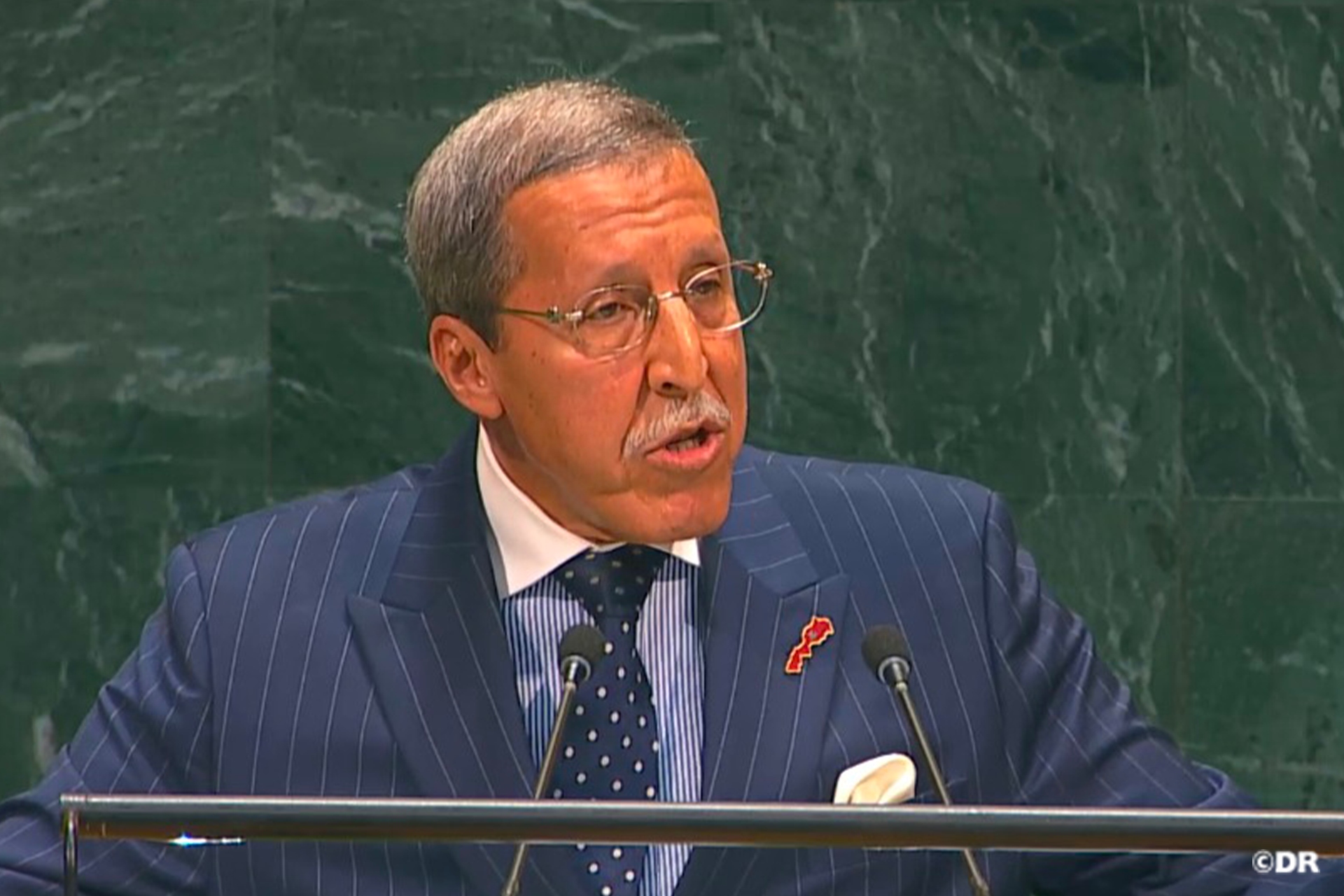
United Nations (New York) – “The Sahara was Moroccan before 30 October, it is even more Moroccan after 30 October, and it will remain Moroccan until the end of time,” declared Omar Hilale, Ambassador and Permanent Representative of Morocco to the UN, on Tuesday before the United Nations General Assembly:
From this august rostrum, I wish to open my statement with a preliminary question: why are we gathered here today?
We are here, of course, because on 30 October 2026 a veto was cast against the resolution that would have opened the way to a final settlement of the regional dispute over the Moroccan Sahara, on the basis of autonomy under Moroccan sovereignty.
Despite this veto, the political weight of the resolution has been carried far beyond the Council. The eleven countries that voted in its favour sent the international community a powerful message: the status quo and the deadlock are no longer acceptable. A political solution is within reach.
My country has not come before you to contest a veto. It has come to proclaim an immutable historical reality: the Sahara was Moroccan before 30 October, it is even more Moroccan after 30 October, and it will remain Moroccan until the end of time.
The veto is not the cause of the deadlock. It is its consequence. As the Arab proverb says, “causes may be many, but the consequence is one.” No deadlock lasts half a century by chance. It has its drivers, its actors, and an address. I intend to bring this to light before this Assembly through six questions and six answers. They will leave you in no doubt about the responsibility of our neighbor, Algeria, for prolonging a 35-year political deadlock and the half-century humanitarian tragedy of 30,000 refugees in the Tindouf camps.
1. Why does Algeria fear autonomy under Moroccan sovereignty? Morocco has put a comprehensive and detailed Autonomy Plan on the table as the one and only basis for settling this dispute, under the sovereignty of the Kingdom. Like it or not, this is the very status that the parties, Algeria and the “polisario”, discussed in detail with Morocco under the co-facilitation of the Personal Envoy and the United States, during the three rounds held in Washington and Madrid. Autonomy and self-determination share a common root: “auto”, meaning “self”. To determine oneself, to manage oneself, to govern oneself, to administer oneself. Autonomy is self-determination in action.
2. Why does Algeria refuse to accept its status as a party? Because accepting it would mean admitting that the key to the deadlock lies in Algiers. An observer does not propose the partition of a territory in disregard of the very populations it claims to defend. An observer does not break a 35-year practice by forcing its way into the Security Council meeting of 30 October 2026 to witness the veto. An observer does not threaten the Security Council with withdrawing from the political process. As for the “polisario”, everything it has is on loan: the Tindouf camps on Algerian soil, the weapons, the financial resources and the diplomatic backing. When the “polisario” says no, it is Algiers we hear. Algiers does not observe this dispute. It orchestrates it.
3. Why does Algeria cling to the “R” in MINURSO? Because that “R” is the last alibi for the status quo. As early as 2000, former Secretary-General Kofi Annan acknowledged that the referendum had reached a dead end. The Council has since removed it from the vocabulary of its resolutions, which have not invoked it for two decades. This “R” no longer stands for Referendum. It stands for Refusal: the refusal of a final settlement of this dispute.
4. Why has Algeria opposed the registration of the population of the Tindouf camps for half a century? Because to count is to be held to account: for the figures, for the diversion of humanitarian aid, and for violations of the most basic human rights. A refugee who is not registered is a refugee who does not count.
5. Why does Algeria reject durable solutions? Because Algeria fears that the Tindouf camps will simply melt away once the refugees leave. No refugee situation is meant to last forever, unless it has become a diplomatic stock-in-trade. Four generations have been born under tents in the scorching heat of Tindouf. They were born refugees. They live as refugees. They might even die as refugees. This humanitarian tragedy has lasted half a century, and Algeria bears the political responsibility for it. Everywhere else in the world, a camp is a place of passage. In Tindouf, it has become a hostage-taking.
6. Why does Algeria fear the broadening of the Personal Envoy’s consultations to the Sahrawi populations of the Southern Provinces, to the diaspora, and to those excluded in the Tindouf camps? Because such consultations would end the capture of the representation of the people of the Moroccan Sahara by an armed separatist group. In the Southern Provinces, Sahrawis vote and freely make their own social and political choices. In Tindouf, others make those choices for them.
The answer to the question of why we are gathered here, Mr. President, comes down to four truths:
1. A veto can end a mandate, but it will change neither history nor Morocco’s sovereignty over its Sahara.
2. Six questions, one answer: the comprehensive and detailed Autonomy Plan under Moroccan sovereignty, presented to and discussed in detail with the other parties, remains the one and only solution for the final settlement of this dispute.
3. Two parties have stood face to face in Washington, in Madrid, and in New York at the Security Council on the day of the 30 October veto: Morocco, which takes responsibility, and Algeria, which evades it.
4. The deadlock lies neither in Rabat, which has honoured all its commitments, nor in New York, which has tried everything. It lies in Algiers,
Related Articles


Gaza: Third Phase of Moroccan Humanitarian Aid Campaign
Moroccan Community in London Celebrates Unity Day, 51st Anniversary of Green March
"Morocco Days in Miami" Builds New Bridges Between Two Sides of Atlantic - Consul

Morocco's Justice Minister Holds Series of Talks on Sidelines of 58th HRC Session

President Trump Reiterates US' Recognition of Moroccan Sovereignty over Sahara, Support for Moroccan Autonomy Proposal
Leave a Comment