

UN: Broad Support in New York for Royal Initiative toward Definitive Resolution of Sahara Regional Dispute
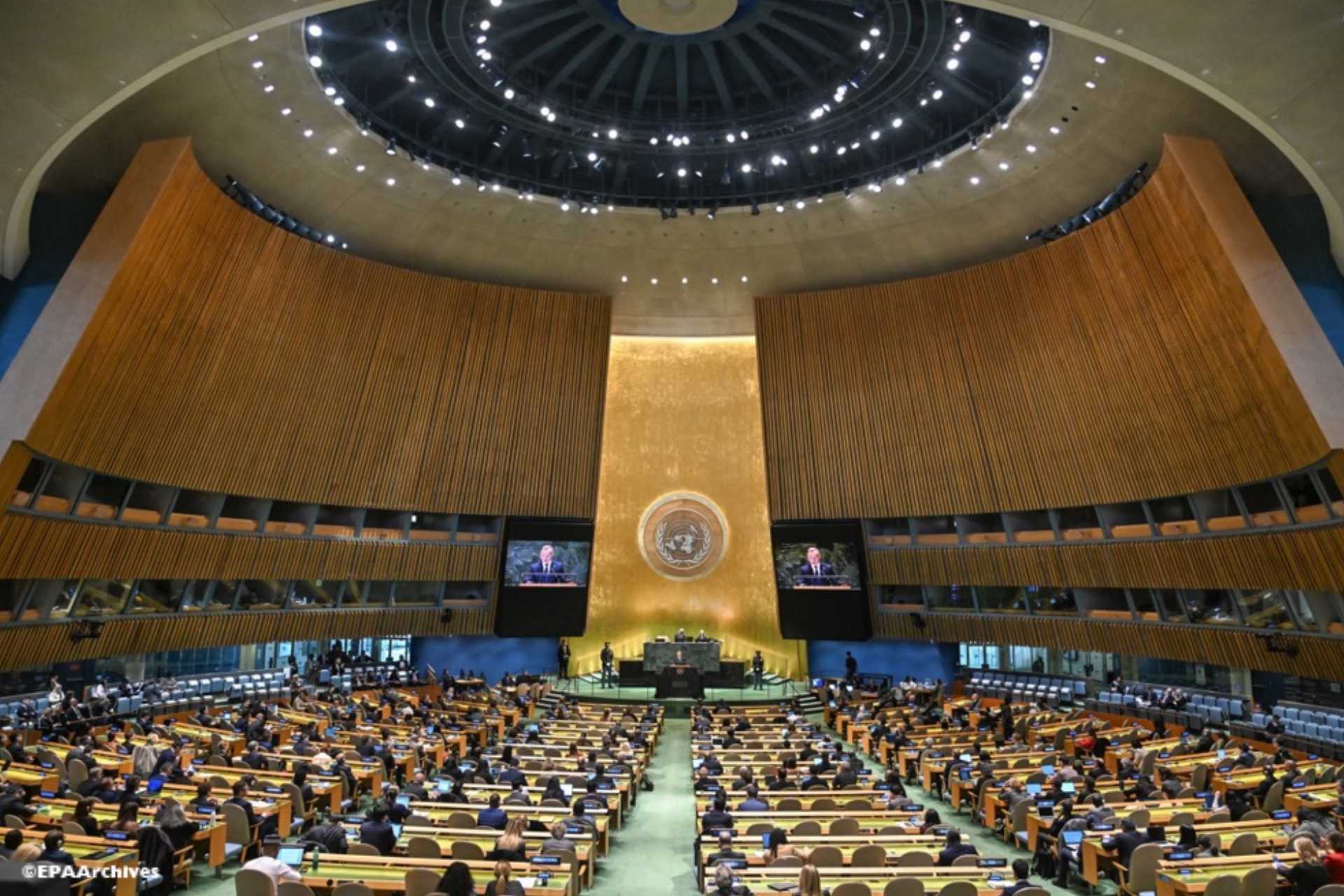
United Nations (New York) – The UN General Assembly debate, held on Tuesday following the Russian veto cast in the Security Council on October 30, 2026, against the renewal of the MINURSO mandate, saw broad support from 18 countries across Africa, Europe, and the Americas, who commended the momentum initiated by His Majesty King Mohammed VI toward a definitive resolution of the Moroccan Sahara issue, within the framework of the Moroccan Autonomy Initiative.
Speaking on this occasion, Equatorial Guinea recalled His Majesty the King’s commitment to maintaining the ceasefire and cooperating fully with the UN during the withdrawal of MINURSO, describing the Moroccan Autonomy Initiative as “a concrete step” in the political process.
Echoing this sentiment, Côte d’Ivoire praised the Kingdom’s adherence to the ceasefire -affirmed by its highest authorities on October 30 and November 4- as well as the north-African Kingdom’s commitment to ensuring an orderly, dignified, and respectful withdrawal of MINURSO. It urged all parties to “embrace this momentum,” noting that the Autonomy Plan, supported by 130 states, constitutes “a serious and credible proposal.”
The Ivorian delegation also highlighted Morocco’s efforts regarding economic and social development and the protection of human rights, notably through the regional commissions in Laayoune and Dakhla.
For its part, Bahrain -speaking on behalf of the member states of the Gulf Cooperation Council (GCC)- reiterated the GCC’s firm position in support of the Moroccan Autonomy Initiative as a solution to the question of the Moroccan Sahara. It noted that Resolution 2797 marks an important step toward a realistic and pragmatic settlement.
In its national capacity, Bahrain commended the Kingdom’s steadfast adherence to the ceasefire and its commitment to facilitating an orderly withdrawal of MINURSO, in full respect of the mission’s privileges and immunities. Bahrain also reiterated its support for Morocco’s sovereignty and territorial integrity, while welcoming the “growing diplomatic momentum” in favor of this settlement.
Guinea-Bissau stated that Resolution 2797 has “laid the foundation for the solution: the Moroccan Autonomy Initiative,” calling for the definitive settlement of this regional dispute to be pursued “exclusively within the framework of autonomy under Moroccan sovereignty.”
The delegation from Guinea-Bissau also highlighted the full participation of the region’s inhabitants and representatives in the legislative elections held on September 23, 2026, and praised the Kingdom’s commitment to an orderly and dignified withdrawal of the UN mission. It also urged the other parties to refrain from any acts of violence or provocation.
The United States, penholder of the draft resolution, recalled that the “historic” Resolution 2797 established the Moroccan Autonomy Plan as the basis for negotiations.
It pointed to the three rounds of high-level talks held this year in Madrid and Washington, with the participation of Algeria and Mauritania. Washington also welcomed Morocco’s commitment to maintaining the ceasefire, while calling on the “polisario” to do the same.
For its part, France affirmed that the present and future of the Sahara fall “within the framework of Moroccan sovereignty,” and that the Moroccan Autonomy Plan constitutes “the path” toward a just, lasting, negotiated, and mutually acceptable political solution, describing Resolution 2797 as a “decisive turning point.”
The United Kingdom continues to view the Moroccan Autonomy Plan as “the most credible, viable, and pragmatic basis” for a lasting settlement.
Portugal described it as “the most serious, credible, and constructive option,” calling for the political momentum initiated this year to be pursued “without delay.”
Speaking on the same occasion, Guatemala advocated for a solution based on respect for the Kingdom’s sovereignty and territorial integrity, and reiterated its support for the “serious, credible, and realistic” Moroccan Autonomy Initiative.
It maintained that the political momentum generated around this initiative should not be undermined by difficulties encountered within the Council.
The Guatemalan delegation further welcomed Morocco’s adherence to the ceasefire and its continued cooperation with the United Nations.
For its part, Madagascar expressed its support for the Kingdom’s sovereignty over its Sahara, as well as for the Moroccan Autonomy Plan, as provided for in Resolution 2797.
Taking the floor, Sierra Leone characterized the Moroccan Autonomy Initiative as “the most credible, realistic, and viable framework,” and commended the commitment expressed by Rabat in favor of an orderly withdrawal of MINURSO.
The Comoros recalled that Resolution 2797 established the Moroccan autonomy proposal -within the framework of the Kingdom’s sovereignty- as the “sole basis for negotiations,” and called upon the “four parties” to resume a constructive dialogue. In this regard, the Comorian delegation welcomed Morocco’s commitments to cooperate toward an orderly, safe, and dignified withdrawal of MINURSO personnel.
Furthermore, The Gambia reiterated its support for the Kingdom’s sovereignty over its entire territory, including the Sahara. It emphasized that the Moroccan Autonomy Plan constitutes the “only realistic, credible, and sustainable basis” for negotiation, encouraging all parties to engage in good faith on this foundation.
For its part, Ecuador described the Moroccan Autonomy Plan as the “only serious, credible, and realistic solution,” urging the parties and neighboring countries to act responsibly and in a constructive spirit.
This debate will continue on Wednesday, with 31 delegations set to address the Assembly, which represents a testament to the sustained interest of the international community in the momentum initiated by the Sovereign toward a definitive settlement of this regional dispute, within the framework of the Moroccan Autonomy Initiative.



Leave a Comment