

Moroccan Sahara: Several Countries Express “Regret” Over Russian Veto at UN General Assembly
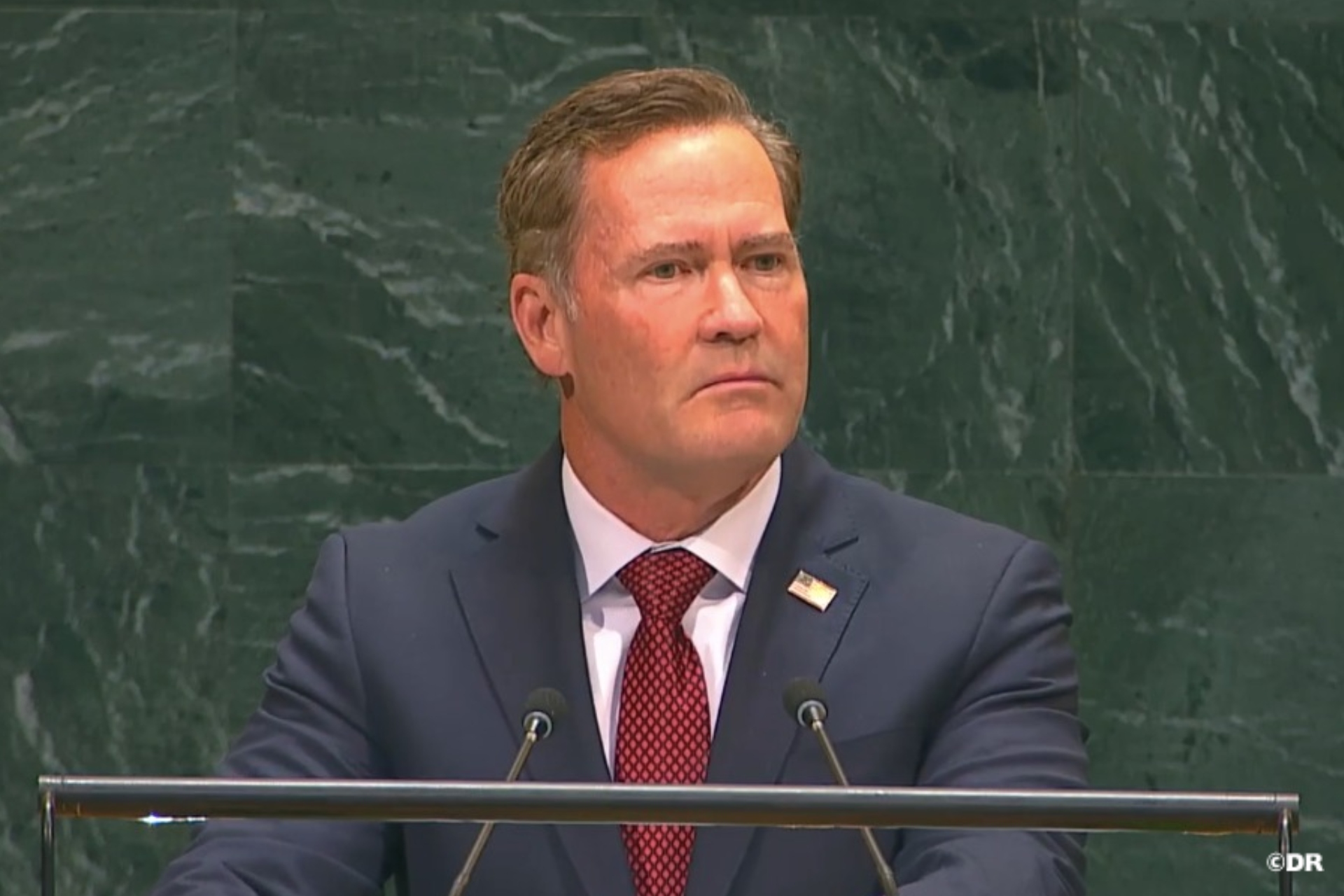
United Nations (New York) – Several countries expressed regret on Tuesday over Russia’s veto, which prevented the adoption of a US draft resolution on the Moroccan Sahara, supported by eleven members of the United Nations Security Council.
Speaking during a plenary session devoted to examining Russia’s use of the veto, US Ambassador to the UN Mike Waltz noted that the United States had introduced a resolution this year that would have extended MINURSO’s mandate by one year, while recognizing the Moroccan autonomy initiative as “the basis for negotiations to move forward”.
“Eleven members of the Security Council supported it and voted in favor of it. But sadly, on the last day, after this resolution had been out for weeks, multiple inputs, many edits, seeking everyone’s views (…), Russia vetoed it,” Waltz deplored.
Referring to the justifications put forward by Russia, the US ambassador noted that “multiple Secretaries general, heads of MINURSO, UN personal envoys— have all warned one way or another that the original referendum framework was impractical and unworkable and unachievable on the ground, no realistic prospect of implementation.”
Commenting on the alternative text proposed at the last minute by Russia – which it described as a “technical rollover” – Waltz asserted that such a move would have rather be “rollback”, that which would have “actually moved us backwards from what 2797 did last year.”
For his part, France’s ambassador to the UN, Jérôme Bonnafont, highlighted the “considerable work” accomplished by Morocco on its autonomy plan, which served as the basis for the resumption of discussions, while expressing his regret over Russia’s use of the veto.
“Unfortunately, the Russian Federation decided to derail this momentum with its veto, which we deeply regret,” said Bonnafont, emphasizing that, for France, “the use of the veto requires restraint and discernment.”
“Russia’s veto is all the more unjustifiable given that the majority of the Security Council, in the text put to a vote, reiterated their support for the mediators and reaffirmed that any political solution must be fair, lasting, and mutually acceptable,” he continued.
The representative of the United Kingdom echoed this sentiment, expressing her country’s “regret” that the resolution to renew MINURSO’s mandate had been “vetoed by Russia.”
This veto, she said, brought the mission’s mandate to an end on very short notice, and “undermined the Council discharging its responsibility and it risks setting back progress towards a political solution” to the question of the Sahara.
On this occasion, the European Union’s ambassador to the UN, Stavros Lambrinidis, emphasized that the EU “regrets the veto cast by the Russian Federation, which prevented the renewal of MINURSO’s mandate.”
In his statement on behalf of the EU member states – joined by Montenegro, Albania, Ukraine, the Republic of Moldova, and Bosnia and Herzegovina, as well as San Marino – the European ambassador warned that “the sudden termination of this mandate not only undermines multilateral efforts toward peace, but also leads to an abrupt end to the mission and a hasty withdrawal, without an adequate transition period.”
Speaking on behalf of the countries of the Gulf Cooperation Council (GCC), Bahrain Ambassador to the UN, Jamal Fares Alrowaiei, noted that the draft resolution submitted by the United States had taken into account the conclusions of the strategic review of MINURSO’s mandate.
This review, he added, highlighted the importance of adapting MINURSO’s missions to political developments and the reality on the ground, using a realistic and pragmatic approach that promotes the establishment of a definitive and lasting political solution.
Finland’s Ambassador to the UN, Janne Taalas, speaking on behalf of the Nordic countries (Denmark, Iceland, Norway, Sweden, and Finland), also expressed these countries’ “deep regret” that Russia had exercised its veto in the Security Council, despite the fact that the “draft resolution enjoyed broad support, with eleven Council members voting in favor of renewing the mandate.”
The use of the veto, he said, “undermines confidence in the Council’s ability to fulfill its primary responsibility, which is to maintain peace and security.”
For its part, the Danish delegation denounced “political obstruction” by Moscow, criticizing it for its lack of constructive engagement in the negotiations.
Taking the floor, the representative of Malta said her country “regrets the use of the veto,” deploring that the UN mission had ended “not as a result of a deliberate decision by the Council, but because of an impasse.”
On the institutional front, Ireland denounced the veto as an “anachronism” and reaffirmed its call for its abolition. New Zealand called it the “most undemocratic feature” of the UN system, while Portugal warned of the increasing use of vetoes.
For its part, Equatorial Guinea denounced the veto as an “unjust and undemocratic” prerogative when abused, arguing that it could paralyze the Security Council and undermine the credibility of the United Nations as a whole.
Other countries, notably Brazil, Switzerland, Ecuador, and Côte d’Ivoire, deplored the impasse that led to the expiration of MINURSO’s mandate, highlighting the risks of a hasty withdrawal and the lack of a prearranged transition.
Guatemala also emphasized the need to overcome the deadlock, while Indonesia expressed deep concern over the polarization of the Security Council and the risks of institutional paralysis.
This debate was held in accordance with Resolution 76/262 (2022), which provides for a public review of the use of the veto before the General Assembly, with the aim of ensuring transparency and accountability.
Related Articles


Kigali: HRH Princess Lalla Asmaa Visits First Central Kitchen in Rwanda for Hospitalized Patients, Established with Support of Mohammed VI Foundation for Sustainable Development
Chadians Trained in Morocco Urged to Put Acquired Skills for Chad's Development, Says Minister
2027 Finance Bill to Concretize Government Commitments, to Consolidate Financial Margins - Finance Minister
Morocco’s Dam Reservoirs Rebound to 66.3% Following Recent Heavy Rainfall
Bayt Mal Al-Quds Agency Holds Free Medical Campaign in Villages South of Al-Quds
Leave a Comment